
Leadership perspectives, business challenges, and the evolving role of talent in supporting growing organizations.
Growth brings new opportunities, but it also raises important questions for business leaders. How do you build the right team? When should you expand your workforce? And how do you create the operational capacity to grow without overwhelming the people already supporting your business?
These questions become even more relevant when businesses begin exploring new markets, working with international teams, or reconsidering how their operations are structured.
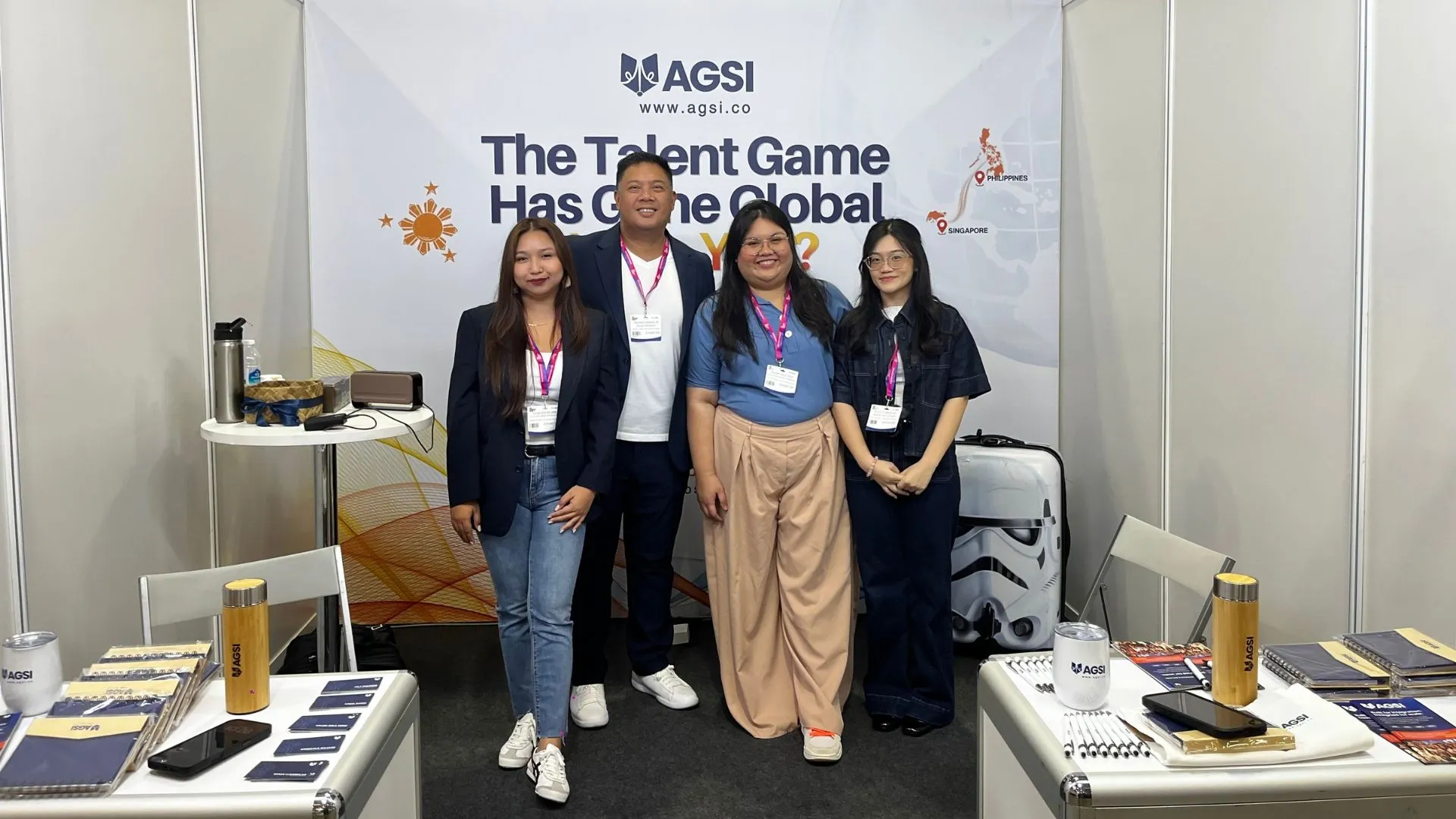
In August 2026, AGSI participated in The Business Show Asia 2026 at Marina Bay Sands Expo & Convention Centre, marking our first exhibition booth and an important step in strengthening our connections across the Asia-Pacific business community.
The two-day event brought our team together with entrepreneurs, business owners, and professionals from different industries. But the experience extended beyond the exhibition floor.
In the weeks following the event, we continued several conversations through scheduled meetings, creating opportunities to explore business challenges, team requirements, and growth priorities in greater depth.
Together, these interactions offered valuable perspectives on how businesses are approaching growth and the role talent plays in supporting their next steps.
What Business Leaders Told Us
Every business approaches growth differently. Some are focused on developing new opportunities, while others are looking for ways to improve their existing operations or strengthen their teams.
Through our conversations at The Business Show Asia and the meetings that followed, three challenges came up most often:
Rising labor and operating costs
Finding and retaining qualified talent
Scaling without sacrificing quality
These challenges pull against each other. Controlling costs can put quality at risk, and growing quickly can strain hiring and retention. That is why leaders rarely describe them as separate problems.
According to Jay Ramos, AGSI’s CEO, the common theme was that everyone wanted to do more with the resources they already had. Where businesses differed was in their stage of growth and what they needed from an outsourcing partner.
“What stood out to me was how many business owners and executives were looking for ways to grow their businesses without significantly increasing their overhead. Whether they were startups, SMEs, or established companies, there was a common interest in becoming more efficient while remaining competitive.”
Jay also noticed that price was not the deciding factor for most of them.
“Business owners weren’t necessarily looking for the cheapest solution. They were looking for the right partner. Someone who understood their business, could provide quality talent, and could grow alongside them.”
If you’re evaluating offshore options, this is worth keeping in mind. Cost is usually the reason a conversation starts, but fit is what decides whether it continues.
What Changed Between the First Conversation and the Follow-Up
An initial conversation is a useful introduction, but it rarely shows the full picture. Our post-event meetings gave us room to move past general introductions and into specifics.
At the booth, conversations naturally started around outsourcing, talent, and cost savings. Once the discussion moved to a sit-down with a business owner or executive, the focus shifted.
“The discussion becomes less about how much an outsourced employee costs and more about how that employee can contribute to the company’s growth.”
The deeper priorities that surfaced included:
Management oversight
Communication
Data security
Employee retention
How an offshore team would integrate into existing operations
Jay observed that outsourcing means different things to different businesses. Once leaders began describing their actual operations, their questions became far more specific. They wanted to know how offshore employees would fit into existing teams, who would manage them, how performance would be measured, and how quickly they could get started.
Notice what is missing from that list: nothing about talent availability. By the time leaders sit down for a second conversation, they have usually accepted that the talent exists. What they are testing is whether the structure around that talent will hold up.
Curious how this plays out for your own team? Let’s talk through it.
Starting Small Is a Common Instinct
Not every company is ready to commit to five or ten employees right away. Some prefer to begin with one person, a part-time resource, or a specific project to see how the working relationship feels.
Jay’s view is that this is the right instinct, and AGSI should support it.
“I’d rather start with one employee, prove our value, and grow to ten than push a client into ten employees before they’re ready.”
The Most Common Hesitation
When asked about the concerns leaders raised, Jay named one above the rest: whether offshore talent can deliver the same level of quality, communication, and accountability as someone working locally.
It is a reasonable question, and the answer usually has less to do with location than with structure. Clear ownership, defined performance measures, and regular check-ins tend to matter more than where someone sits. A team with those in place has a much better chance of delivering on all three.
Building Teams That Can Grow With the Business
Many companies begin with a narrow request: one role, one function, one problem. That is often the right way to start. The mistake is treating the first hire as a finished design.
Roles evolve. A position that begins with routine support often takes on coordination, then ownership. Businesses that plan for that progression tend to define clearer responsibilities and check-ins early, which makes the team easier to expand later.
Jay saw this shift in how leaders think about hiring itself.
“One thing that stood out to me from our experience at The Business Show Asia in Singapore is that businesses are becoming more thoughtful about how they grow. It’s no longer just about hiring more people.”
Business owners are asking whether they truly need another full-time employee, whether certain functions can be outsourced, or whether technology and AI can help their existing teams become more productive.
“I think leaders are realizing that adding headcount doesn’t always mean adding productivity.”
What to Consider Before Expanding a Team
Whether you are hiring locally or offshore, Jay suggests working through five questions first:
Business needs: Is this position really necessary, and what results should it deliver?
Return on investment: Will this hire generate revenue, improve efficiency, or free up leadership to focus on growing the business?
Leadership and accountability: Who will manage this person, provide training, and measure their performance?
Scalability: Can you start small, prove the concept, and expand as the business grows?
Culture and communication: Whether someone works locally or offshore, how do you make sure they feel like part of the team?
If you can answer all five with confidence, you are in a strong position to hire. If you can’t yet, that is useful information too, because it shows where to focus before adding anyone.
How AGSI Approaches These Conversations
Our role is to support your team, not replace it. We start by understanding the business, then shape the team around it.
- We ask about goals and existing processes before discussing roles
- We build Philippine-based teams that integrate into your daily operations
- We support a phased start, so you can expand when the first hires are working well
- We stay involved after hiring, because retention and fit matter as much as the first placement
What These Conversations Tell Us About the Road Ahead
Looking at the whole experience, Jay’s biggest takeaway was how similar the challenges are, no matter where a business operates.
“Regardless of where you do business, the challenges are very similar. It’s about people, growth, managing costs, and finding the right partners.”
He also found it encouraging to introduce AGSI to a new market, and to see how our experience supporting U.S. businesses could translate into helping companies across Asia.
The conversations also reinforced a belief that shapes how AGSI works.
“We’re not in the business of simply providing employees. We’re in the business of helping other businesses succeed through our people.”
Jay was candid that the outsourcing industry can lean too heavily on savings.
“Yes, affordability is important, but that shouldn’t be the only reason a company chooses to work with AGSI. We need to focus on delivering value, providing quality talent, developing our employees, and making sure our clients are seeing a real return on their investment.”
His advice to other business leaders:
“Stop thinking about hiring as simply adding headcount and start thinking about building capacity. As business leaders, we sometimes get caught up in trying to do everything ourselves or assuming that growing means hiring more people locally. But today, we have access to talent, technology, and resources from around the world. The opportunity is to figure out how to bring those resources together to make our businesses stronger.”
Common Questions About Exploring Offshore Staffing
Is it better to start with one hire or a full team?
Many businesses start small, because it lets them test their onboarding, communication rhythm, and management approach with limited risk. A single well-defined role often teaches you more than a larger group launched at once. You can then add roles as the first ones settle in.
How do I know which role to offshore first?
Look for work that is repetitive, process-driven, and takes up leadership time without needing your direct judgment. Those tasks are usually the easiest to document and hand over. If you can write the steps down, the role is likely ready.
What should I have in place before hiring?
At a minimum, a clear description of the outcomes you expect, a named manager, and basic documentation of the tasks involved. You don’t need a perfect playbook, but a new team member needs something to work from. Gaps here are a more common cause of early frustration than skill gaps.
Can an offshore team really match the quality of a local hire?
It can, when the structure around the role is solid. Quality, communication, and accountability depend on how clearly the role is defined, how performance is measured, and how often you review progress together. If you are unsure, starting with one role gives you a low-risk way to judge for yourself.
Continuing the Conversation Beyond Singapore
The Business Show Asia 2026 was an important milestone for AGSI, not only because it marked our first exhibition booth, but because of the relationships and conversations it helped create.
From initial introductions at Marina Bay Sands to more focused discussions in the weeks afterward, the experience gave us opportunities to listen, learn, and better understand the needs of businesses across different industries.
As AGSI continues strengthening its presence in the Asia-Pacific region, these insights will remain valuable in shaping how we approach conversations about talent, operational support, and business growth.
If you’re weighing your own next step, a few questions are worth asking:
What would you want a new team member to own within six months?
Which tasks are taking up the most of your leadership time right now?
How ready are your processes to be handed to someone new?
Would a phased start suit your business better than a single large hire?
Because behind every staffing requirement is a business trying to move forward, and understanding where that business wants to go is where the conversation should begin.
Looking at ways to strengthen your team?
Connect with AGSI
to explore how Philippine-based talent can support your business goals.